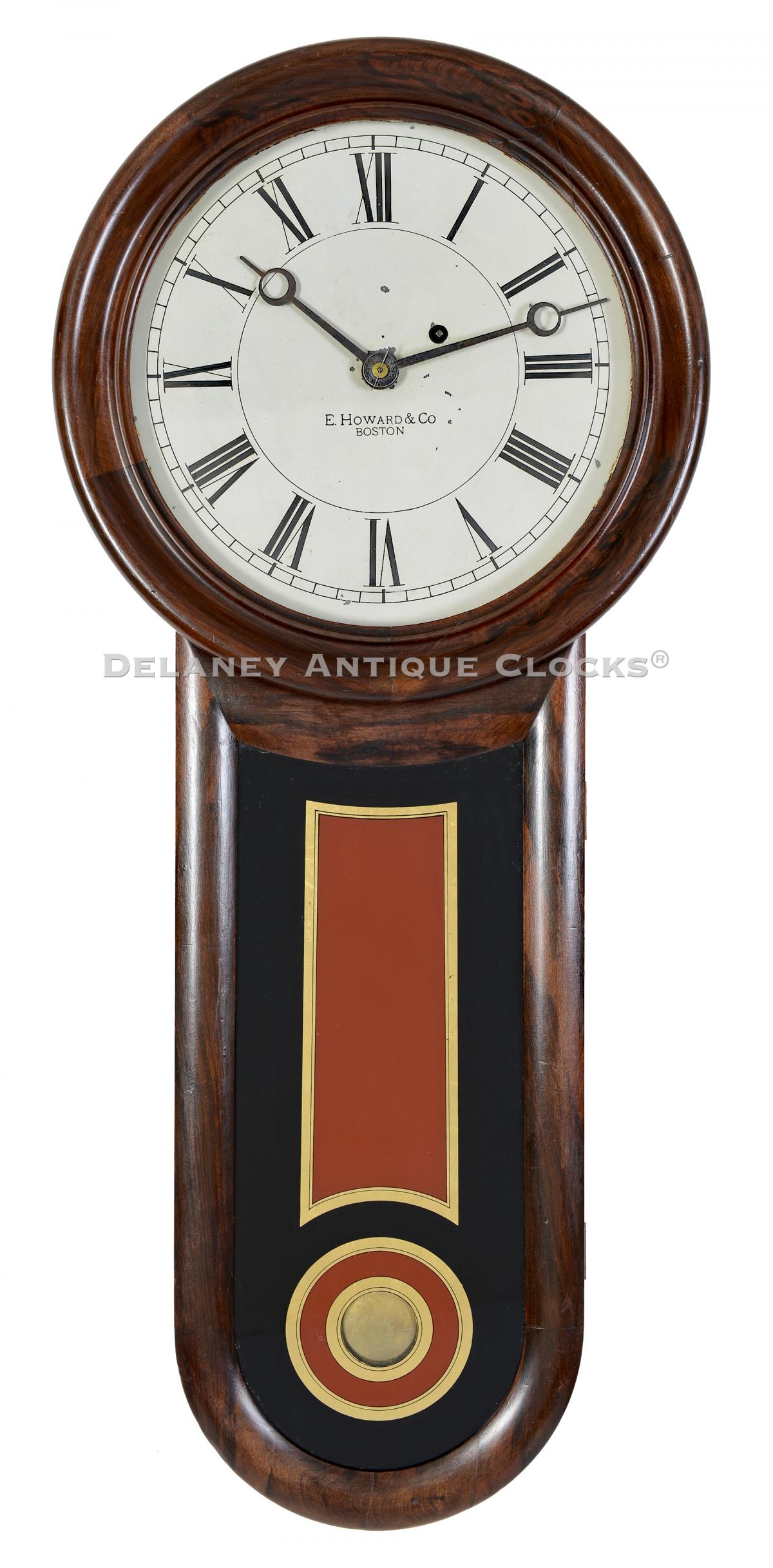
E. Howard & Co., Boston, Massachusetts. Model Number 11 Keyhole. A wall timepiece. 223129.
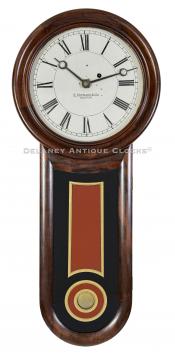
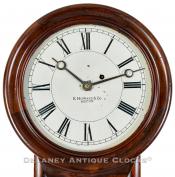
This fine wall timepiece was made by the E. Howard Clock Company in Boston, Massachusetts. They cataloged it as the Model No. 11, and they claimed it was well “adapted for rooms where a large dial is required, and the cost low.” In the 1870s, it was originally priced at $25.00. Today, this model is often referred to as the “Keyhole” in the trade due to the case form and its resemblance to a keyhole found in most doors of the period.
The case is constructed of cherry and stained with India ink to simulate the grain pattern of rosewood. The original graining is in very good original condition. The nicely shaped bezel is fitted with glass.
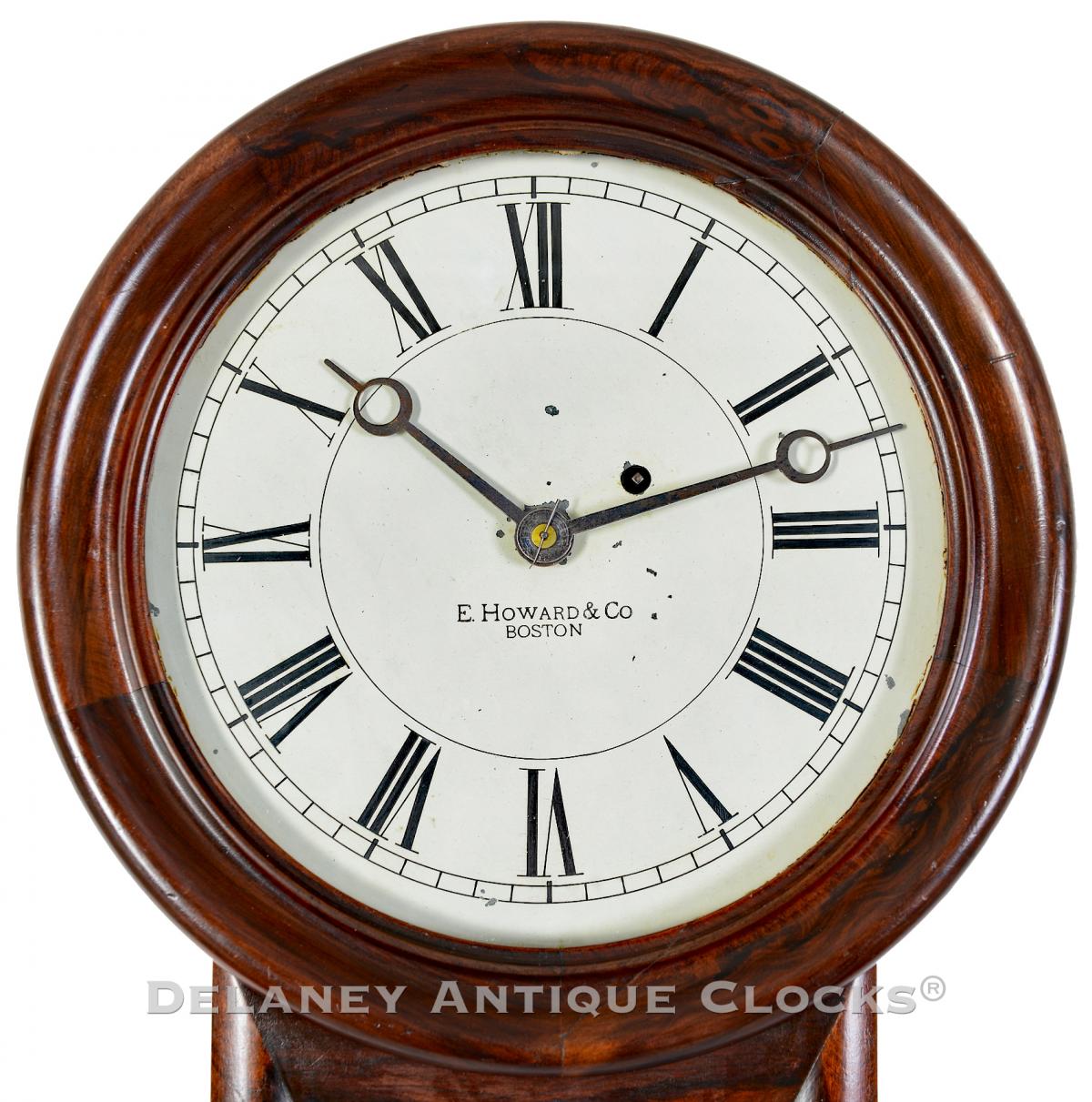
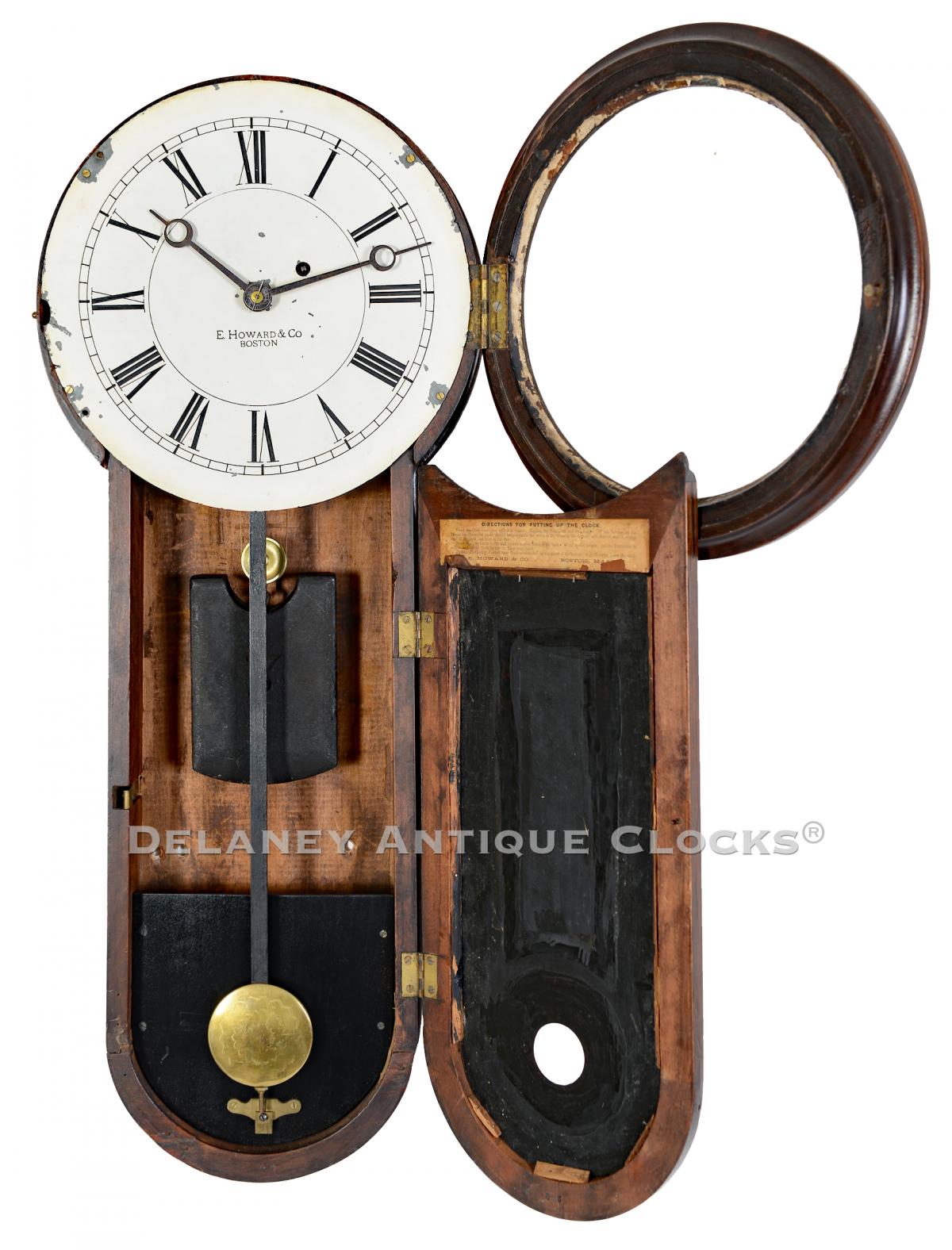
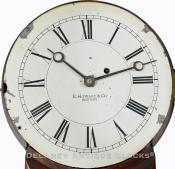
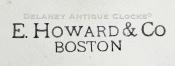
The bezel is hinged and opens to access the painted dial. This dial measures eleven inches in diameter. It is decorated with a segmented minute ring and Roman-style hour numerals. It is signed by the clockmaker. Open moon-style hands display the time.
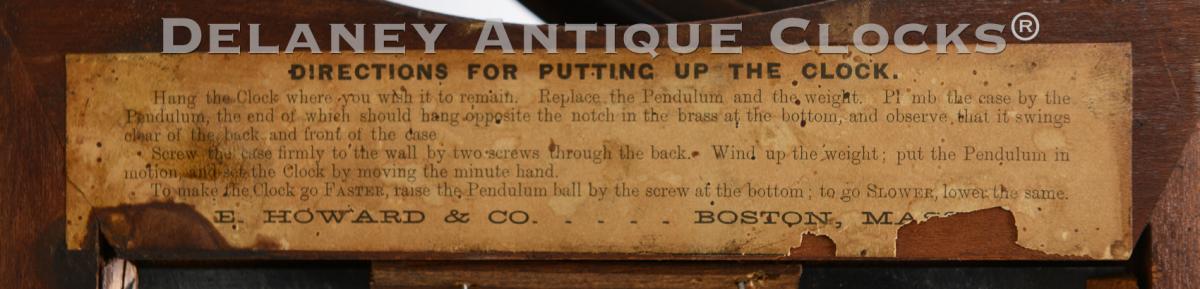
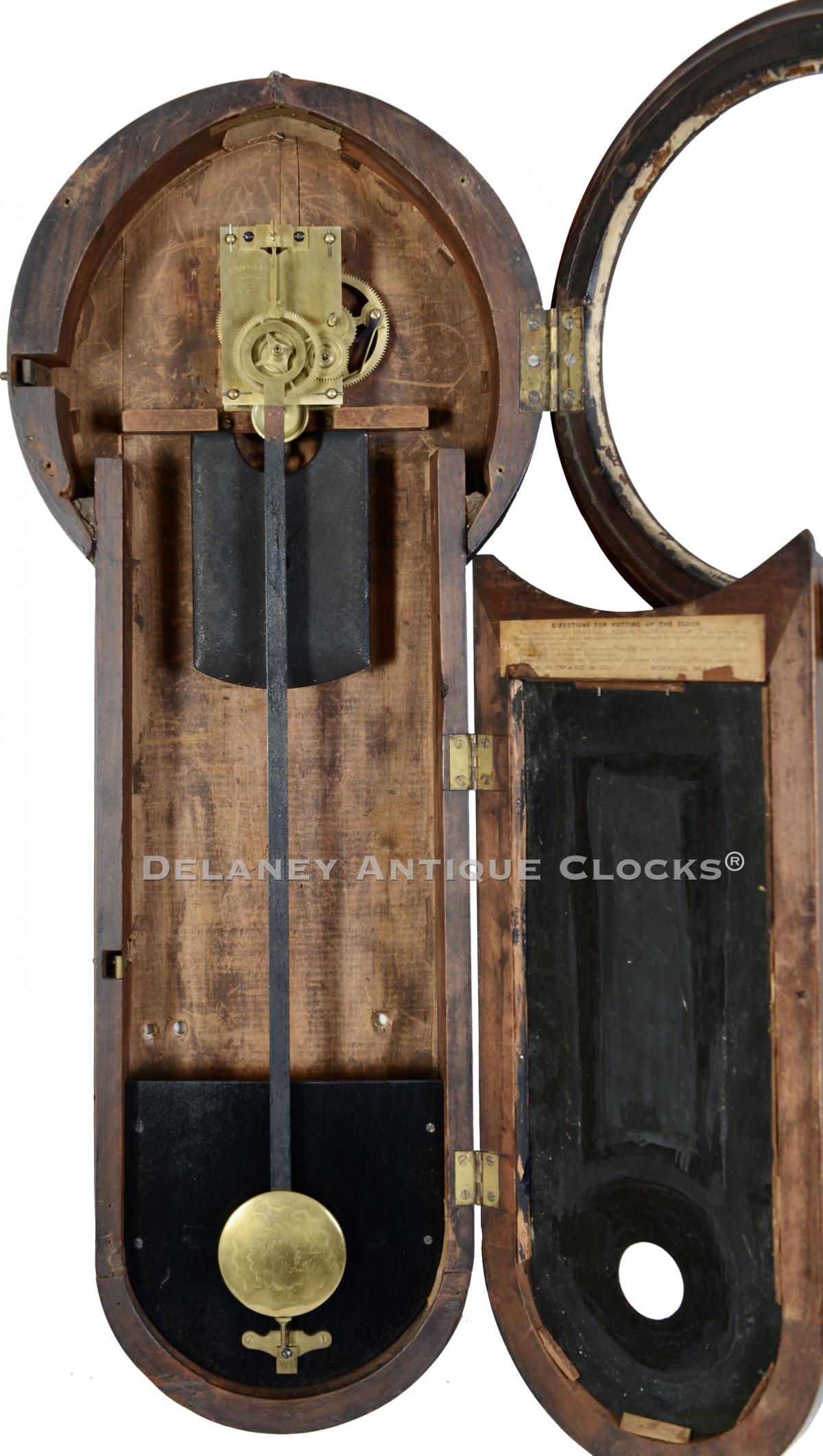
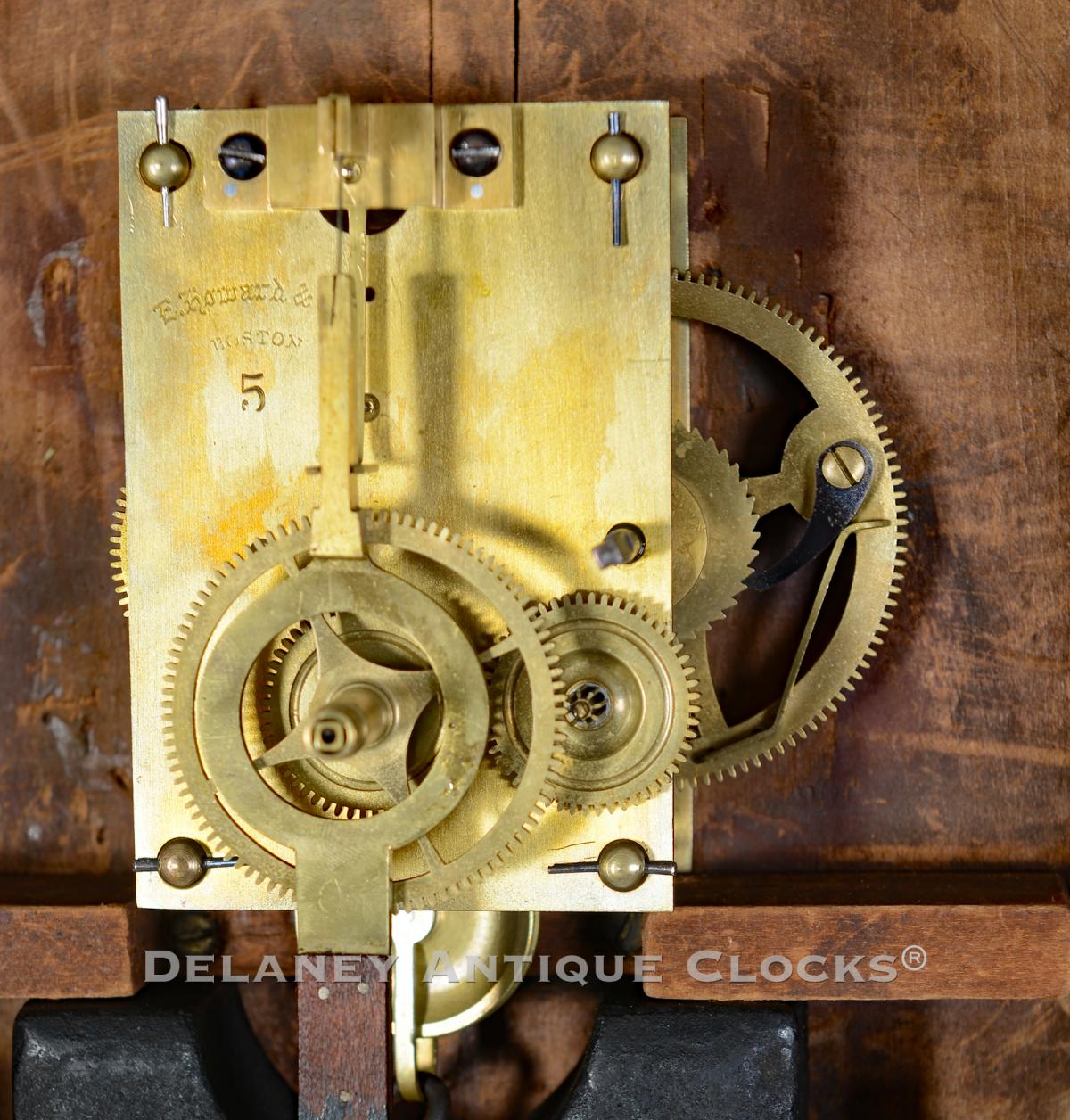
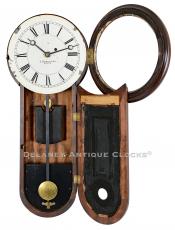
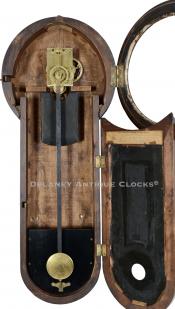
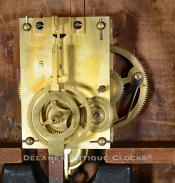
The movement is made of brass and is of excellent quality. It is weight-powered or driven and features a recoil escapement. It is a very accurate timekeeper for its small size. The movement is die-stamped on the front plate, “E. Howard & Company / Boston / 5.” The cast iron weight is original to this clock. The original wooden rod supports the brass-faced bob and is decorated with a concentric ring-turned design formatted with damascene patterns lightly engraved in the brass. This bob can be viewed through the opening in the lower glass. This glass is paint-decorated from the back in the traditional black, gold, and red Howard colors. Pasted inside this door is E. Howard’s “DIRECTIONS FOR PUTTING UP THE CLOCK.” This label has experienced some minor losses and light staining. Overall, it is in good original condition and is a nice bonus. The weight board, mounted inside the case, is painted black. The pendulum tie-down is mounted to this board.
This fine clock was made circa 1875. It is approximately 31 inches long. The bezel measures 13.25 inches wide and 4.75 inches deep.
Inventory number 223129.
The E. Howard & Company succeeded the Howard & Davis firm in 1857. The Howard & Davis firm was comprised of Edward Howard and David Porter Davis and was established in 1842 in Roxbury, Massachusetts. Both men had just completed their clock apprenticeship under the guidance of Aaron Willard Jr in Boston. The Howard & Davis firm made high-grade clocks, precision balances, sewing machines, fire engines, and watches. After the dissolution of Howard & Davis, Edward Howard became Boston's leading manufacturer of weight-driven residential and commercial clocks. The firm also made a large number of tower clocks and watchman and salve clock systems. These sold well in the last quarter of the 1800s.
It has been said that the E. Howard Clock company never made an inexpensive clock, and everything they made was of very good quality. As a result, Howard clocks have become very collectible and are prized by their owners. Today, the E. Howard name enjoys outstanding name recognition.
For a more in-depth reading of Edward Howard and his various businesses, please read "Willard's Patent Time Pieces," written by Paul Foley.