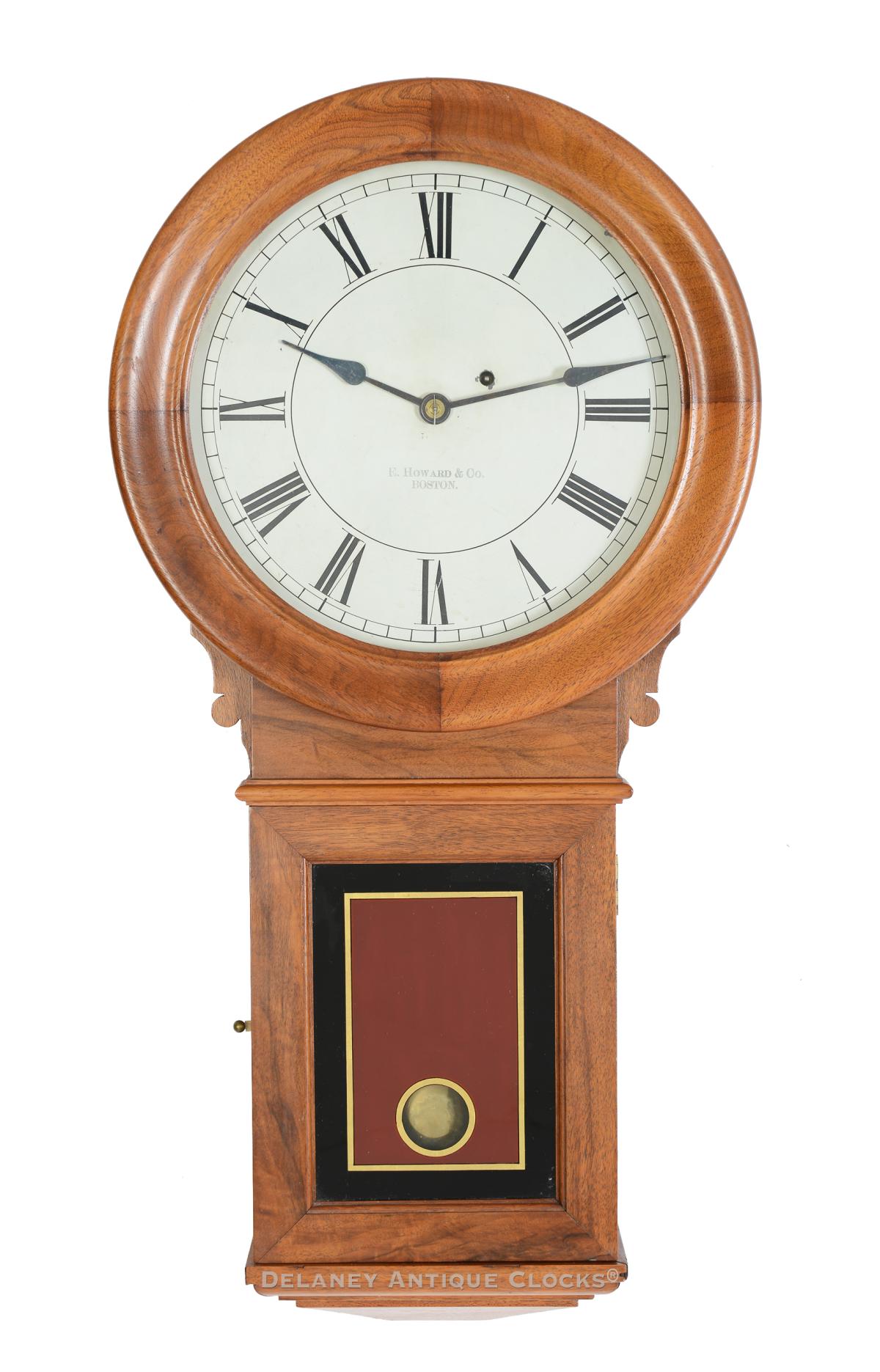
E. Howard & Co. Model No., 70-12 wall clock in a walnut case. 223130.
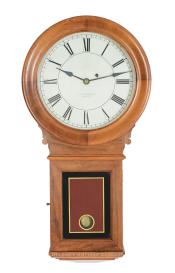
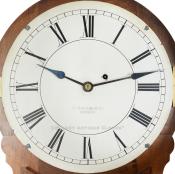
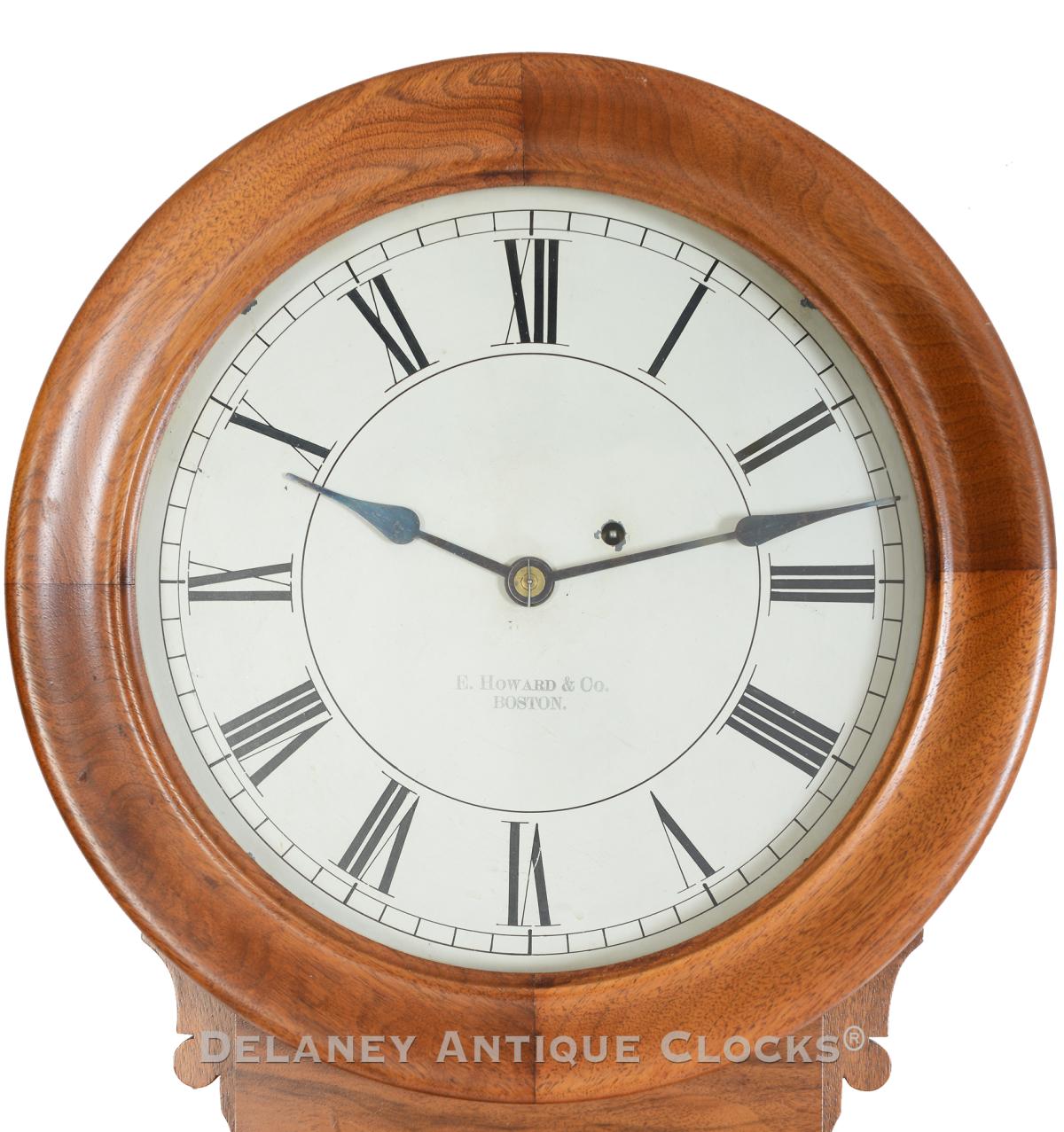
This Howard Model Number 70 is in excellent condition. The walnut case, a unique feature seldom seen in this model, sets it apart from the majority of Howard 70 cases built in oak. The darker wood with a tighter grain structure and better figure has been refinished to a rich, excellent color.
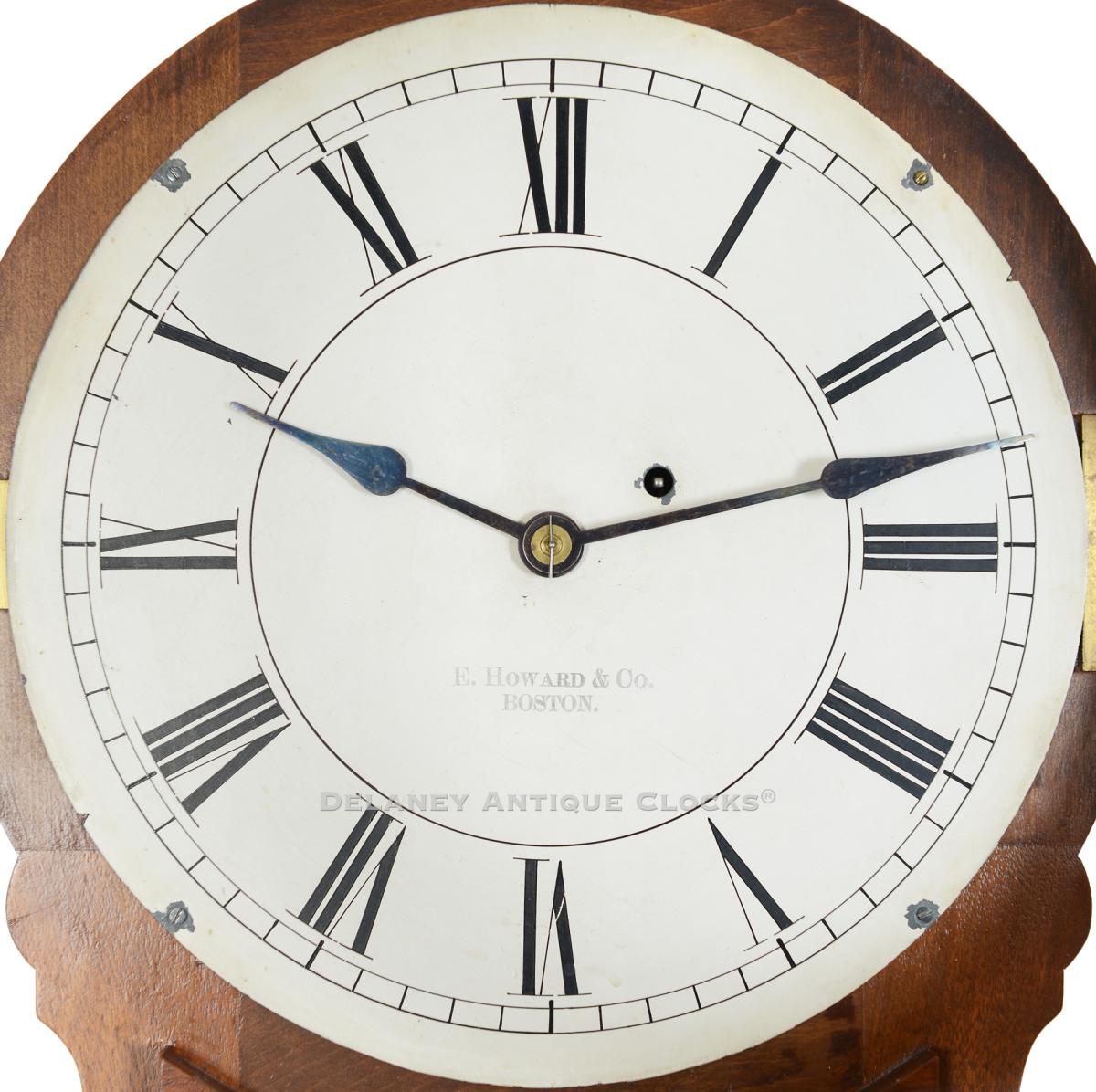
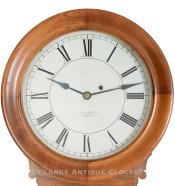
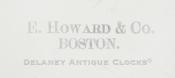
The 12-inch dial is painted on tin and is original to this clock. The Maker's name is signed in block letters above the numeral "VI." The segmented time ring frames the Roman-style hour numerals. Spade-shaped hands display the time.
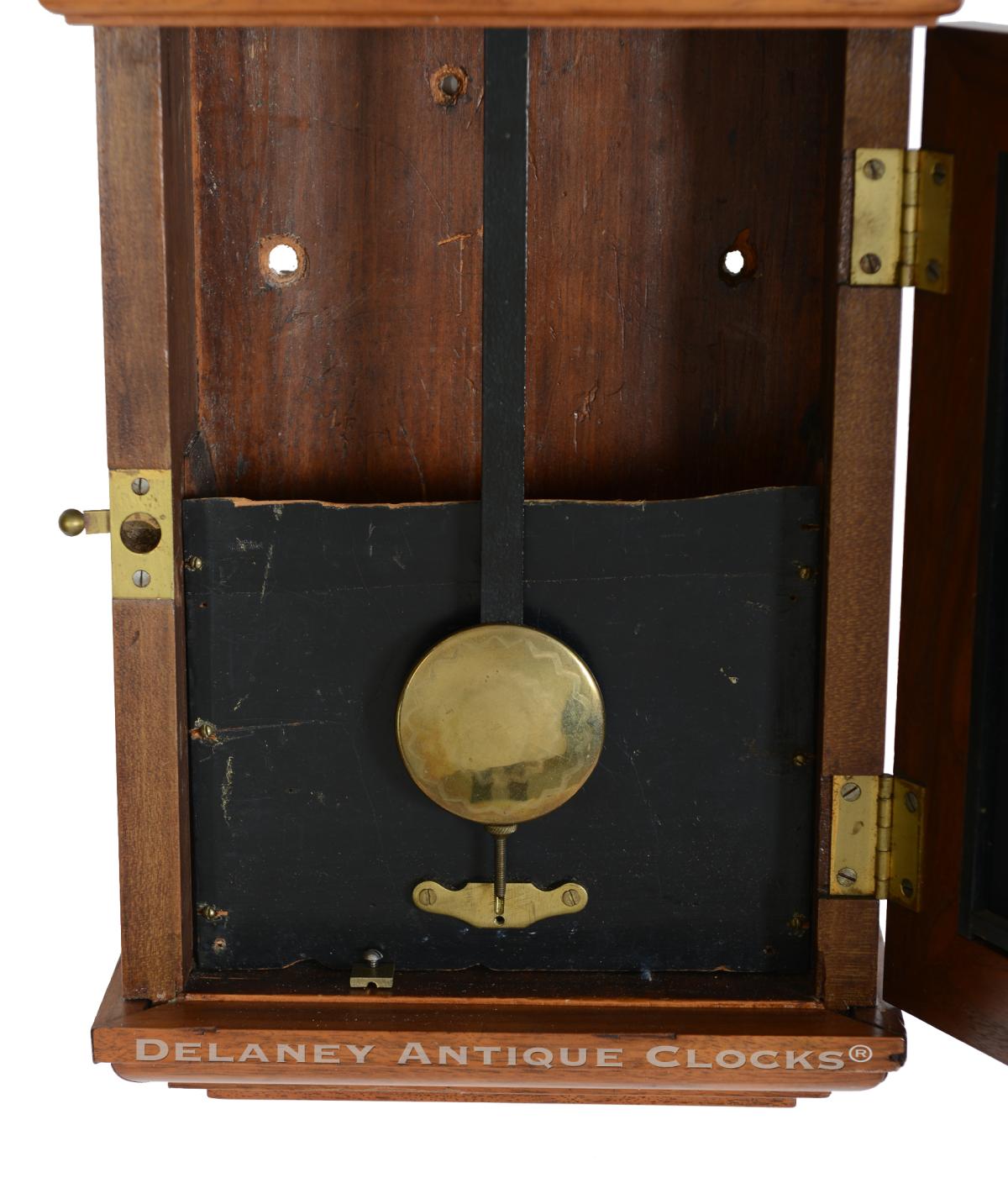
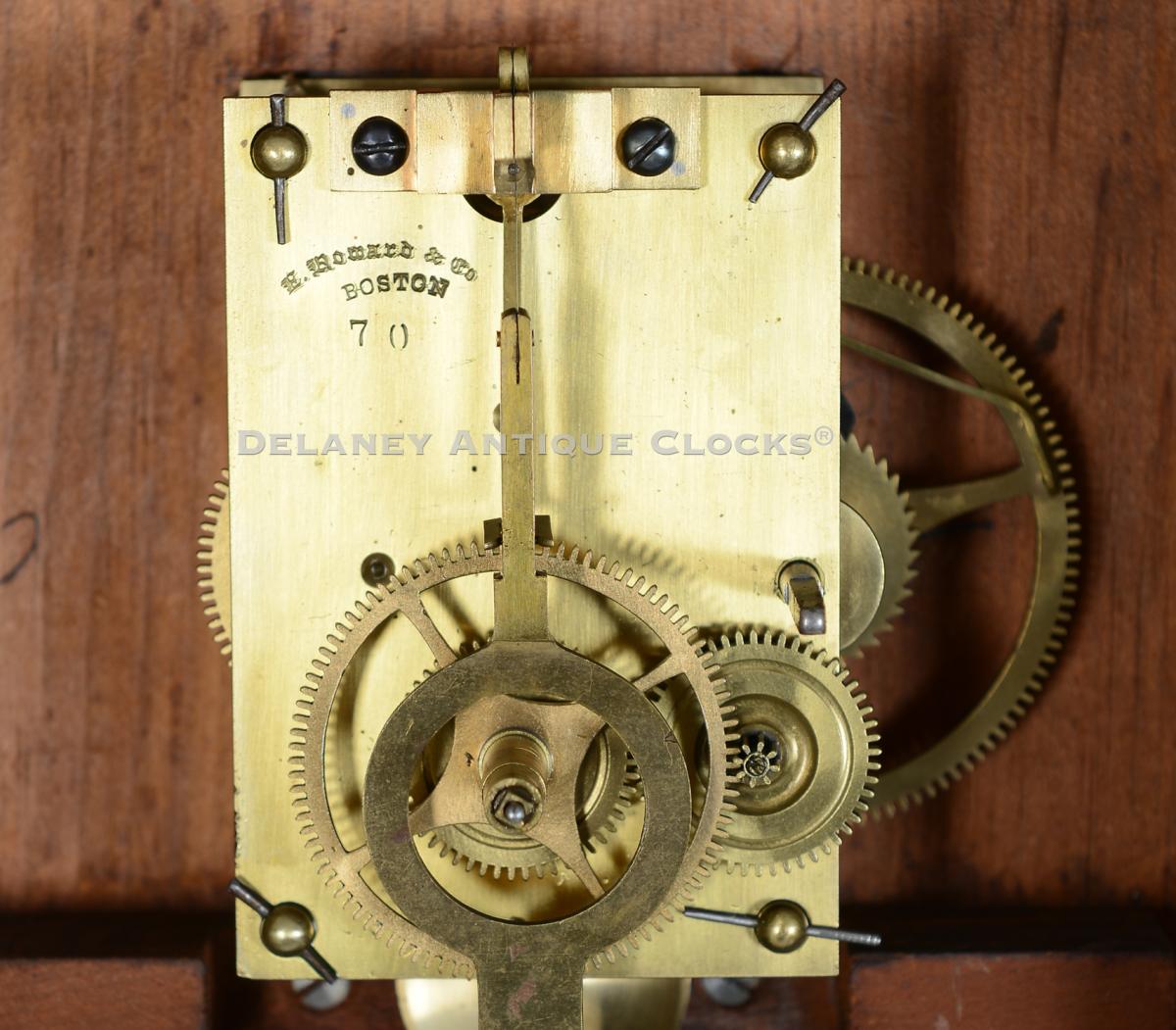
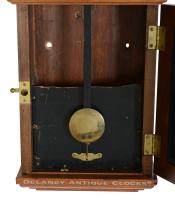
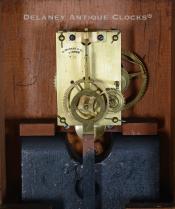
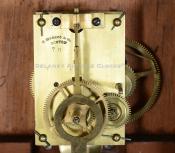
The weight-driven movement is brass and of excellent quality. This movement is designed to run for eight days on a full wind. It features a recoil escapement. The Maker's name and model number "70" are die-stamped into the front plate. The weight that powers the clock is cast iron and die-stamped with the number "70." This is original to this clock. The pendulum rod is made of wood and is painted black. The zinc bob is covered in brass, and the damascene decoration applied to it is in good original condition. The glass in the lower door has been professionally re-painted and is done in the traditional Howard colors of black, red, and gold.
This fine example was made circa 1900. It measures approximately 32 inches long.
Inventory number 223130.
The E. Howard & Company succeeded the Howard & Davis firm in 1857. The Howard & Davis firm was comprised of Edward Howard and David Porter Davis and was established in 1842 in Roxbury, Massachusetts. Both men had just completed their clock apprenticeship under the guidance of Aaron Willard Jr in Boston. The Howard & Davis firm made high-grade clocks, precision balances, sewing machines, fire engines, and watches. After the dissolution of Howard & Davis, Edward Howard became Boston's leading manufacturer of weight-driven residential and commercial clocks. The firm also made a large number of tower clocks and watchman and salve clock systems. These sold well in the last quarter of the 1800s.
It has been said that the E. Howard Clock company never made an inexpensive clock, and everything they made was of very good quality. As a result, Howard clocks have become very collectible and are prized by their owners. Today, the E. Howard name enjoys outstanding name recognition.
For a more in-depth reading of Edward Howard and his various businesses, please read "Willard's Patent Time Pieces," written by Paul Foley.